Roadside Assistance Tips Every Driver Should Know
August 14, 2026
Vehicle problems rarely happen at a convenient time. A dead battery, flat tire, empty fuel tank, or unexpected mechanical issue can interrupt your day and leave you unsure about what to do next. When the problem cannot be handled safely on your own, professional roadside assistance can help you determine the next step.
Some roadside problems can be resolved where the vehicle is located. Others require towing to a repair shop, dealership, or another safe destination. Knowing when to call for help can prevent additional vehicle damage and reduce the amount of time you spend waiting beside the road.
Nakia’s Towing provides towing, roadside assistance, auto salvage, and accident recovery services for drivers in Gary, Indiana, and the surrounding area. This guide explains common roadside situations, what information to provide when requesting help, and how to stay safer until assistance arrives.
What Is Roadside Assistance?
Roadside assistance is designed to help drivers dealing with vehicle problems away from home. Depending on the situation and the services available, a towing professional may be able to restart the vehicle, address a minor issue, or prepare it for safe transportation.
The goal is to assess the immediate problem and determine whether the vehicle can return to the road safely. If the issue cannot be corrected at the scene, the towing operator can help arrange transportation to an appropriate destination.
Roadside assistance should not be confused with complete automotive repair. An operator may be able to identify an obvious problem, but many mechanical and electrical issues require diagnosis by a qualified repair facility.
Common Reasons Drivers Need Roadside Assistance
Different vehicle problems require different solutions. Providing accurate information when you call helps the towing company understand what equipment and assistance may be needed.
A Dead or Weak Battery
A dead battery is one of the most common reasons a vehicle will not start. Batteries can lose power because of age, cold weather, electrical problems, or lights and accessories being left on.
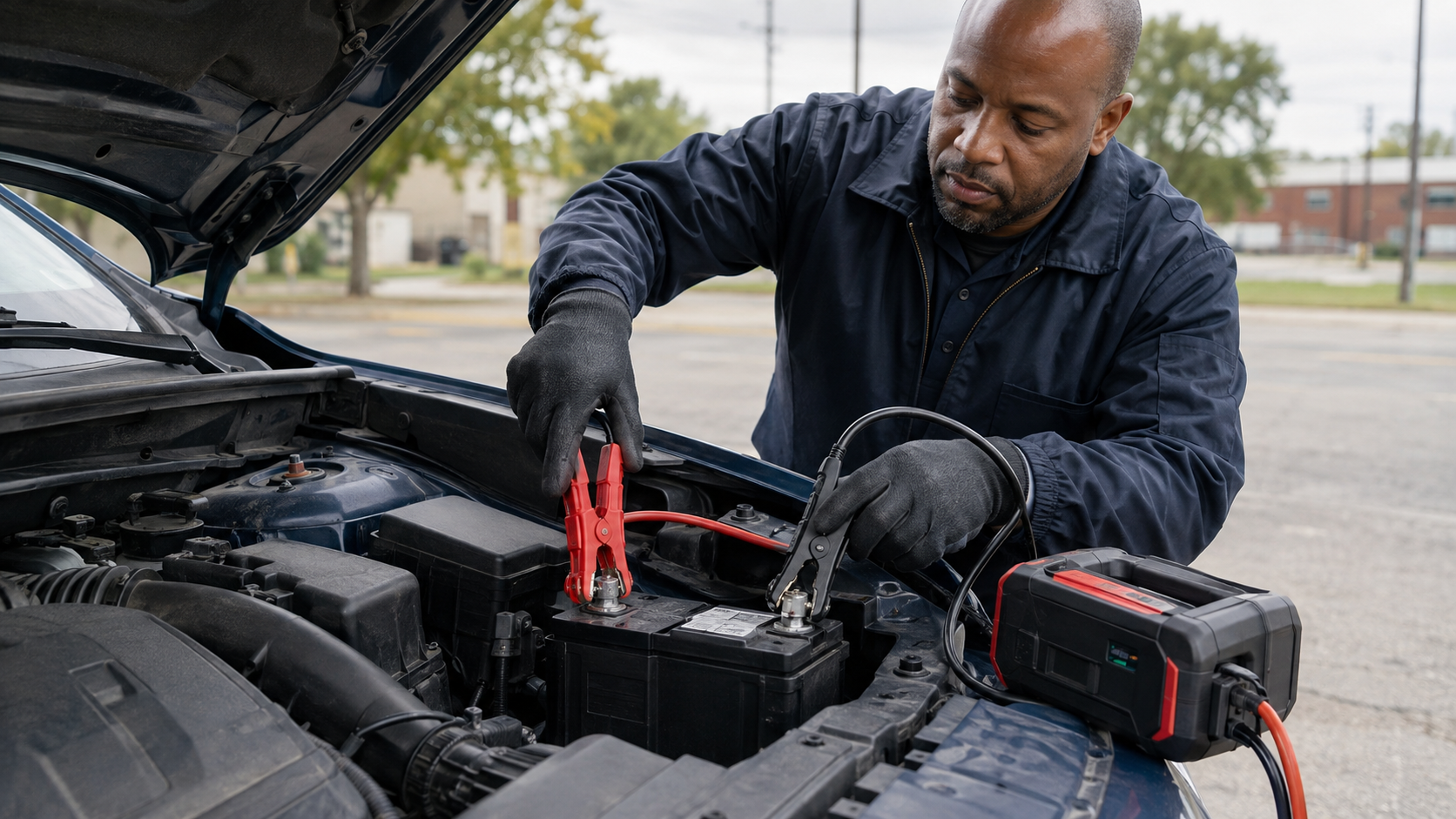
If the dashboard lights appear dim or you hear clicking when turning the key, the battery may not have enough power to start the engine. A professional jump-start may get the vehicle running, but it does not correct the reason the battery lost its charge.
After a successful jump-start, consider having the battery and charging system tested. If the vehicle shuts off again or warning lights remain illuminated, towing may be safer than continuing to drive.
A Flat or Damaged Tire
Punctures, potholes, road debris, and worn tread can leave a vehicle with a flat tire. Changing a tire may seem straightforward, but the location and road conditions can make it dangerous.
If your vehicle is close to moving traffic, parked on an uneven shoulder, or missing the correct tools, it is better to request assistance. A professional can assess whether the spare tire can be installed safely.
Not every tire problem can be solved with a spare. Towing may be necessary if more than one tire is damaged, the wheel is bent, the spare is unusable, or the vehicle does not have a spare tire.
A Vehicle Lockout
Locking the keys inside a vehicle can happen quickly, especially when loading groceries, managing children, or rushing between appointments. Trying to force the door open may damage the lock, weather stripping, window, or electronic components.
If a child, vulnerable adult, or animal is locked inside, contact emergency services immediately. Those situations require a faster emergency response than a standard vehicle lockout.
For a routine lockout, provide the vehicle’s make, model, year, and location when requesting help. Modern vehicles use different locking systems, so this information can help determine what type of assistance may be appropriate.
Running Out of Fuel
A low fuel level, inaccurate gauge, missed exit, or unexpected delay can leave a driver stranded. If the vehicle loses power because the tank is empty, move away from traffic if possible and turn on the hazard lights.
Avoid walking along a highway or busy road to find a gas station. Requesting professional help is generally safer than leaving the vehicle in an unfamiliar or high-traffic area.
If the vehicle does not restart after receiving fuel, another issue may be present. The fuel system may need attention, or the vehicle may need to be towed for inspection.
An Overheated Engine
An overheating engine requires prompt attention. Warning signs may include a high temperature gauge, steam from beneath the hood, an unusual odor, or an illuminated temperature warning light.
Continuing to drive an overheating vehicle can cause serious engine damage. Pull over safely, shut off the engine, and allow it to cool. Do not remove the radiator cap while the engine is hot because pressurized coolant can cause severe burns.
An overheating vehicle often needs professional inspection. Roadside assistance can help evaluate the immediate situation and arrange towing if the vehicle should not be driven.
An Unexplained Mechanical Problem
Strange noises, fluid leaks, warning lights, steering problems, or sudden power loss can indicate a more serious issue. Even if the vehicle still moves, continuing to drive may make the damage worse.
If you are unsure whether the vehicle is safe, stop in a secure location and request assistance. Describe what happened before the problem began, including any sounds, smells, warning lights, or changes in handling.
When Is Roadside Assistance Enough?
Roadside assistance may be enough when the problem is minor and the vehicle can safely return to service. Examples may include a battery that responds normally to a jump-start or a flat tire that can be replaced with a properly inflated spare.
Before driving away, pay attention to how the vehicle starts, idles, steers, and responds. Check the dashboard for warning lights and listen for unusual sounds. If anything still feels wrong, request a tow instead of risking another breakdown.
The operator’s role is to address the immediate roadside concern. A mechanic may still need to inspect the vehicle afterward, especially when the cause of the problem is unclear.
When Does the Vehicle Need to Be Towed?
Roadside assistance does not always end with the vehicle being driven away. Towing may be the safer option when:
- The engine will not start after reasonable assistance
- The vehicle is leaking fuel, oil, or coolant
- A wheel, axle, or suspension component is damaged
- The transmission will not shift correctly
- The vehicle has been involved in a collision
- Warning lights indicate a serious problem
- The vehicle overheats repeatedly
- The steering or braking system does not feel normal
- No safe or usable spare tire is available
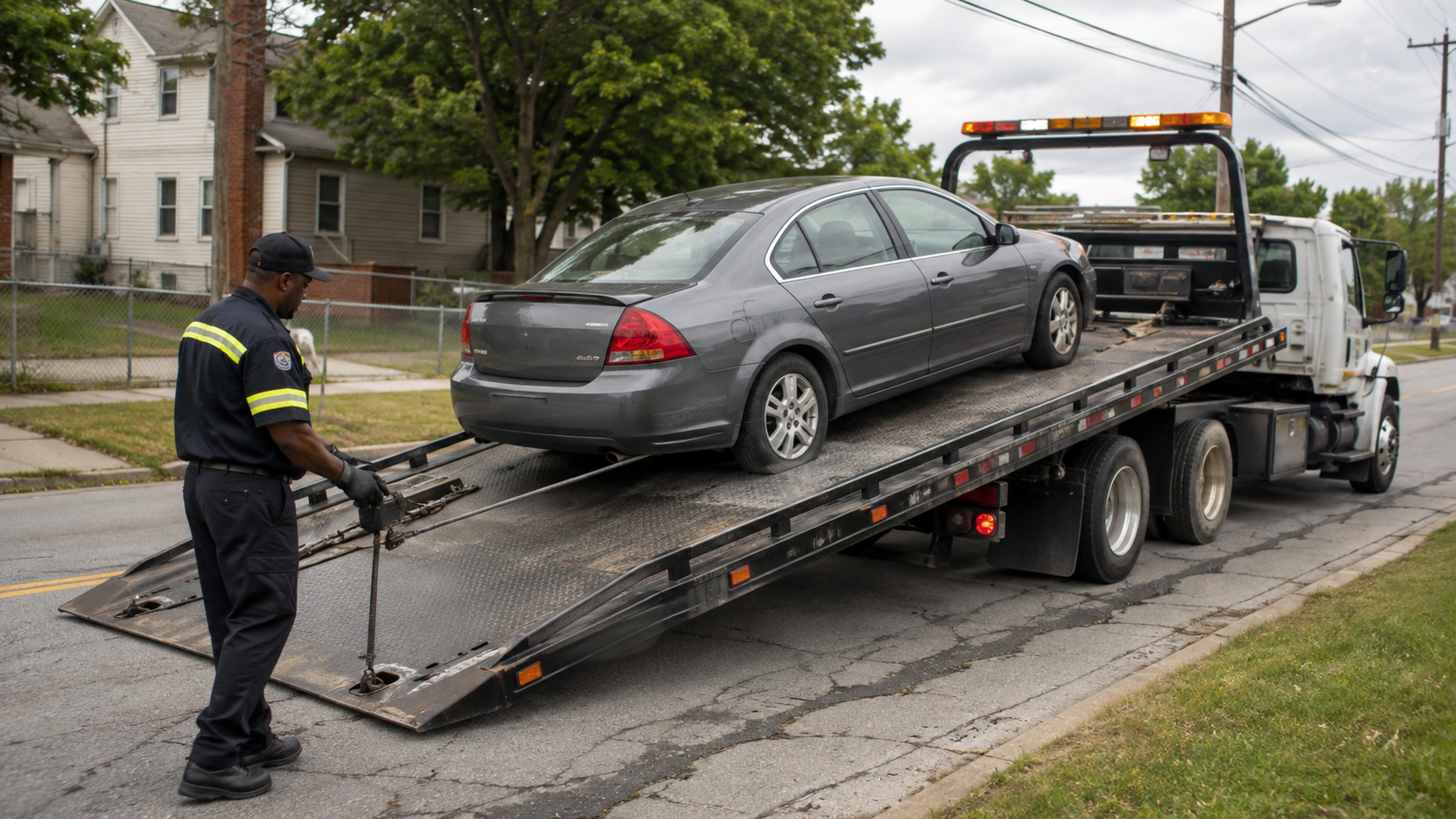
Depending on the vehicle and its condition, a flatbed tow truck may be recommended. Keeping all four wheels off the road can help protect damaged, all-wheel-drive, low-clearance, or specialty vehicles during transportation.
What to Do Before Calling for Help
First, move the vehicle away from active traffic if it can be done safely. Pull into a parking lot, side street, or wide shoulder when possible. Turn on the hazard lights and set the parking brake.
Before calling, gather the information the towing company will need:
- Your exact location or nearest cross street
- The direction you were traveling
- Your vehicle’s make, model, year, and color
- A clear description of the problem
- Whether the vehicle can start, steer, or roll
- Whether you are in a travel lane or another dangerous position
- The destination you prefer if towing is required
Location details are especially important in unfamiliar areas. A nearby business, highway marker, intersection, or recognizable building can help the operator find you more efficiently.
How to Stay Safer While Waiting
If the vehicle is in a safe location, remaining inside with the doors locked may be the best choice. If you must leave the vehicle, move well away from traffic and avoid standing between vehicles or near the roadway.
At night, keep the hazard lights on if the battery has enough power. Use reflective warning equipment only when you can place it without entering traffic. Do not attempt repairs that require you to crawl beneath the vehicle or work close to passing cars.
Keep your phone available so the towing company can contact you for directions or updates. Be cautious if an unmarked vehicle approaches. Confirm the company name and operator before allowing anyone to access or move your vehicle.
What Happens When Roadside Help Arrives?
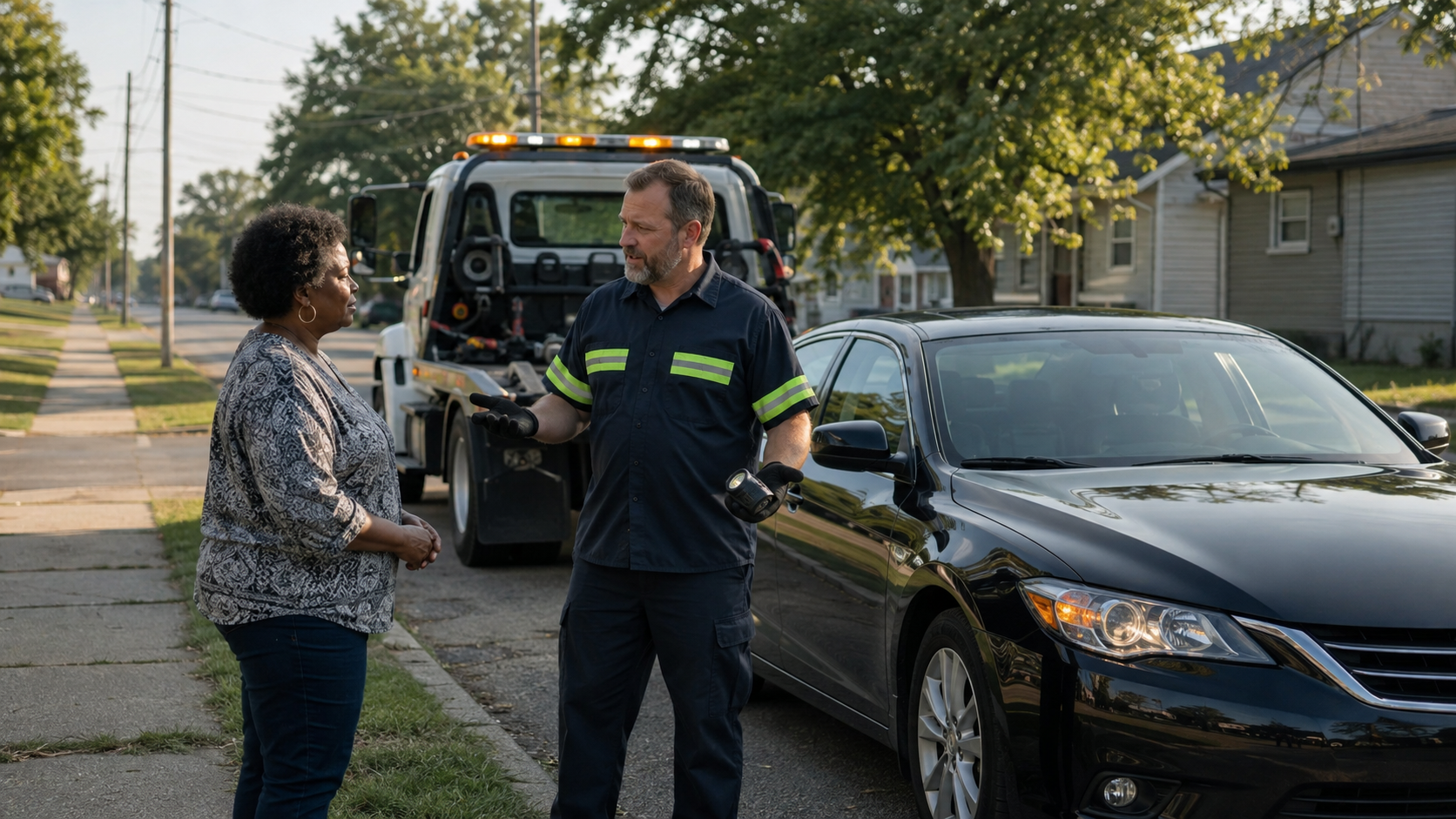
The operator will assess the vehicle, ask what happened, and inspect the immediate problem. This evaluation helps determine whether the issue can be addressed safely at the scene.
Give the operator space to work and follow any safety instructions. Roadside equipment, traffic conditions, hot engine components, and moving vehicles can create hazards around the service area.
If towing is necessary, confirm where the vehicle will be transported before it is loaded. This may be a repair shop, dealership, storage facility, home, or another approved location. Collect important personal belongings if it is safe and practical to do so.
How to Prepare for Future Roadside Problems
A few basic preparations can make an unexpected breakdown easier to manage. Keep a phone charger, flashlight, reflective vest, first-aid kit, drinking water, and seasonal clothing in the vehicle.
Regular maintenance also lowers the risk of becoming stranded. Check the battery, tire pressure, tread depth, fluid levels, lights, and windshield wipers as recommended. Make sure the spare tire is inflated and that the vehicle has the necessary jack and tools.
Save the contact information for a local towing company before you need it. Having a reliable number readily available can save time when you are dealing with traffic, poor weather, or an unfamiliar location.
Request Roadside Assistance in Gary, Indiana
A roadside problem does not always mean your vehicle needs major repairs, but it should never be handled in a way that puts you or other drivers at risk. Professional assistance can help identify a practical next step, whether that means addressing a minor issue at the scene or towing the vehicle to a repair facility.
Nakia’s Towing serves drivers in Gary, Indiana, with roadside assistance, flatbed towing, accident recovery, auto salvage, and related towing services. If your vehicle will not start or does not feel safe to drive, contact Nakia’s Towing, explain what happened, and provide your location. The team can help determine what type of assistance your situation requires.