When Is Flatbed Towing the Right Choice in Gary, IN?
August 14, 2026
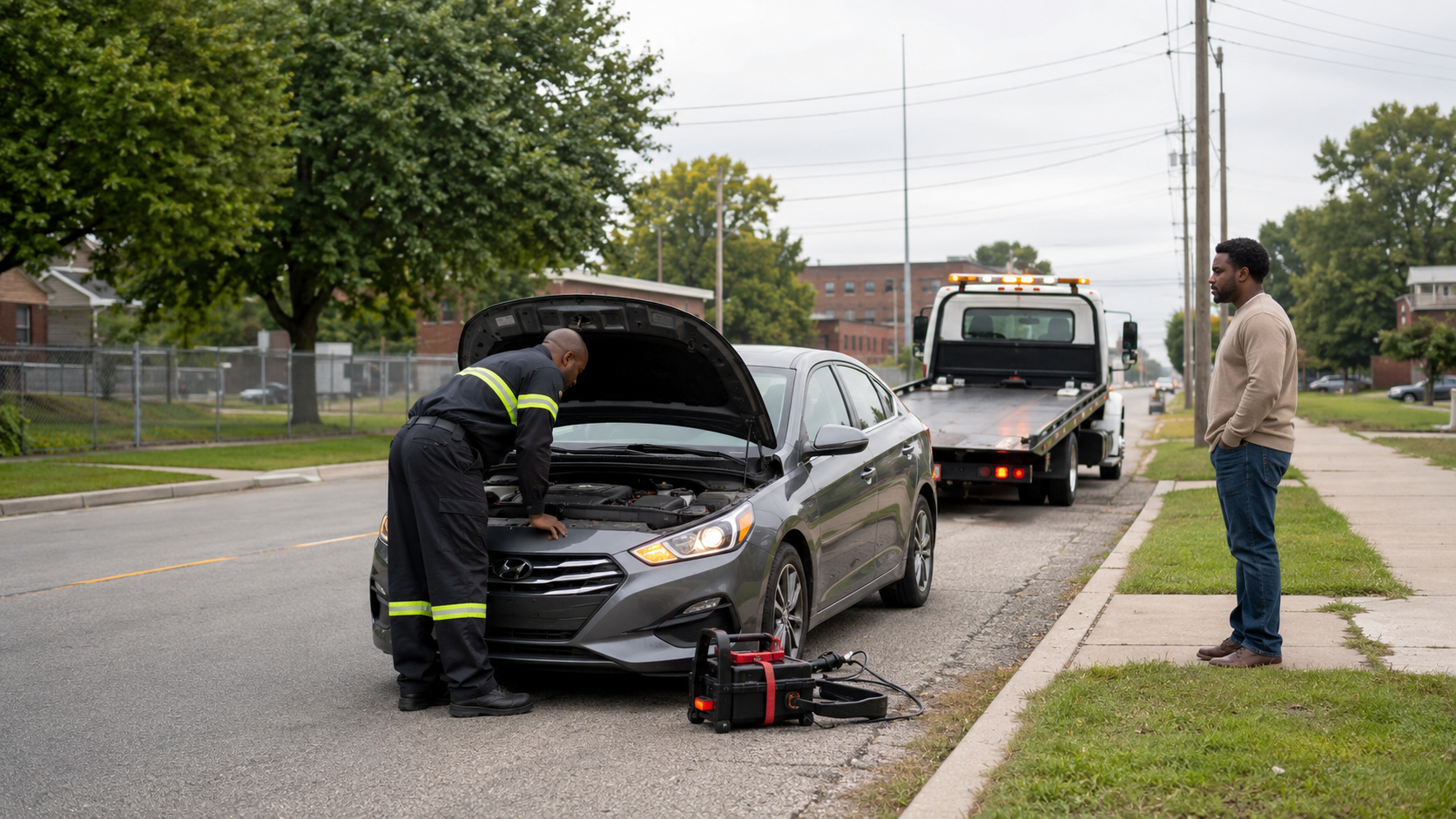
A vehicle breakdown or accident can leave you wondering how your car will be moved without causing additional damage. While several types of tow trucks can transport vehicles, flatbed towing is often the preferred option when safety, stability, and vehicle protection are the main concerns.
With flatbed towing, the entire vehicle rests on a level platform instead of traveling with two wheels on the road. This method limits contact with the pavement and keeps the vehicle secure throughout the trip. It can be especially helpful for vehicles with collision damage, mechanical problems, low ground clearance, or specialized drivetrains.
Nakia’s Towing provides professional towing, roadside assistance, auto salvage, and accident recovery services for drivers in the Gary, Indiana area. Understanding how flatbed service works can help you know when to request it and what to expect when the tow truck arrives.
What Is Flatbed Towing?
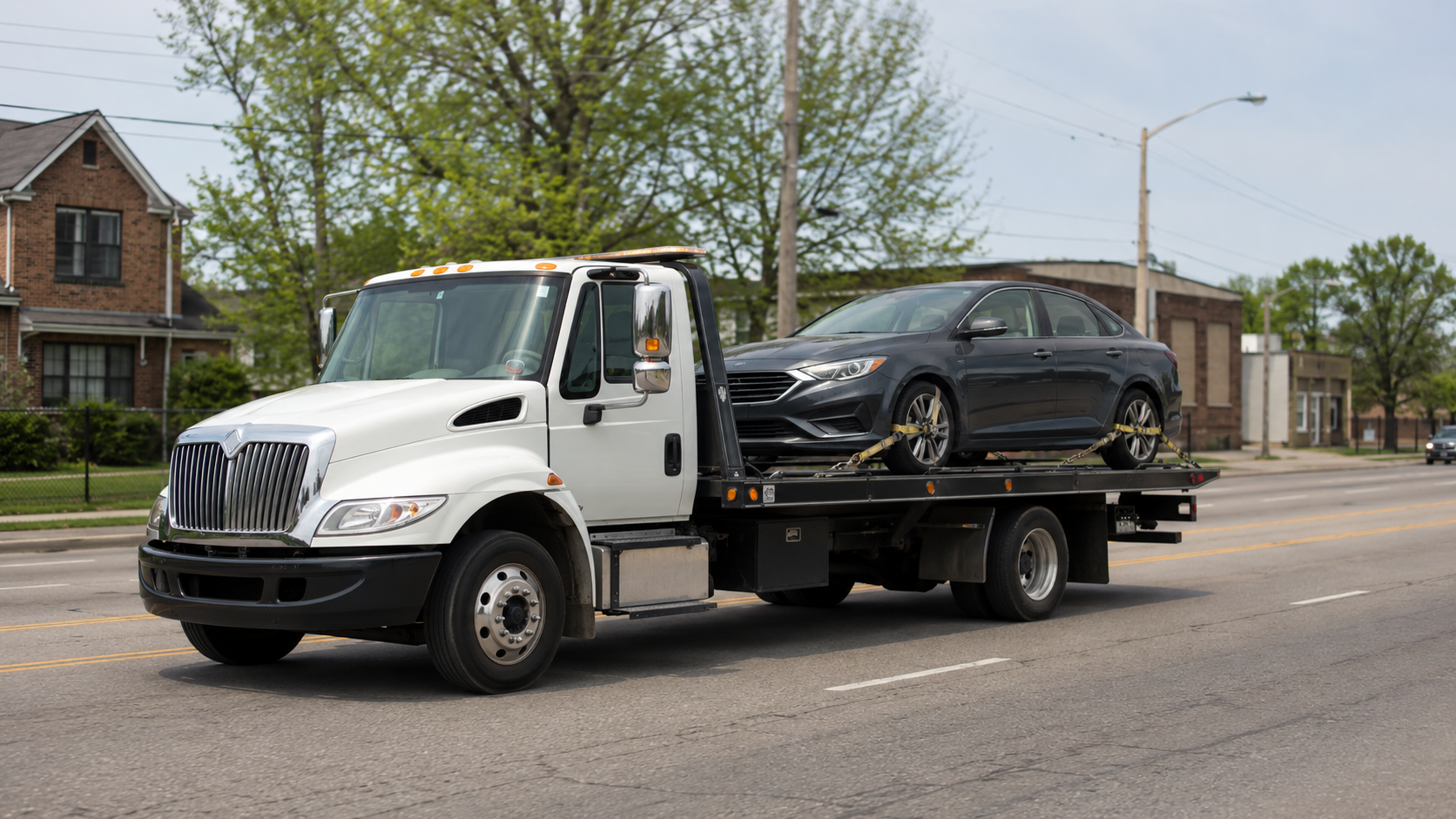
A flatbed tow truck has a long platform mounted behind the cab. The operator lowers and tilts the platform toward the ground, then uses a winch to pull the vehicle onto the bed. Once the vehicle is properly positioned, it is secured at designated points before the platform returns to its transportation position.
Because all four wheels remain off the road, the vehicle does not experience the same rolling motion it would with some other towing methods. This makes a flatbed useful for transporting vehicles that should not be driven or pulled on their own wheels.
Flatbed trucks can handle many common passenger vehicles, SUVs, light trucks, and specialty automobiles. The appropriate truck will depend on the vehicle’s dimensions, weight, condition, and location.
When Should You Request Flatbed Towing?
Flatbed service is a practical choice in many situations. The following are some of the most common reasons a towing professional may recommend it.
Your Vehicle Has Been in an Accident
Collision damage can affect more than the visible body panels. A damaged axle, wheel, suspension component, or steering system may make it unsafe for the vehicle to roll normally.
Placing the vehicle completely on a flatbed reduces unnecessary movement while it is being transported. It can also make it easier to move a vehicle with bent wheels, damaged tires, leaking components, or loose exterior parts.
If your vehicle is blocking traffic or resting in an unusual position, accident recovery may need to take place before it can be loaded. Give the towing company a clear description of the scene so the operator can arrive with suitable equipment.
You Drive an All-Wheel-Drive or Four-Wheel-Drive Vehicle
Many all-wheel-drive and four-wheel-drive vehicles have specific towing requirements. Pulling one of these vehicles with certain wheels on the pavement may place stress on the transmission, transfer case, or drivetrain.
A flatbed keeps every wheel stationary during transport. However, towing recommendations vary between manufacturers and models. Checking the owner’s manual is always a sensible step when time and safety permit.
Your Vehicle Has Low Ground Clearance
Sports cars, performance vehicles, and modified cars may have bumpers, spoilers, exhaust components, or body panels that sit close to the ground. An improper loading angle can scrape or damage these parts.
An experienced operator can adjust the loading process to create a gentler approach angle. In some situations, additional equipment may be used to help the vehicle transition onto the bed without making contact with the ground.
You Own a Luxury, Classic, or Specialty Vehicle
Owners of classic, collectible, luxury, and restored vehicles often prefer flatbed towing because it keeps the vehicle away from road debris and pavement contact. Proper securement helps limit movement without relying on the vehicle’s own drivetrain.
Before loading begins, tell the operator about any unusual features, modifications, fragile components, or approved tie-down points. Sharing these details helps the operator plan the safest loading method for that particular vehicle.
The Vehicle Cannot Roll or Steer Properly
A car with locked wheels, a broken steering system, or severe mechanical damage may be difficult to load. Flatbed towing can still be possible, but the operator may need specialized techniques or equipment.
When requesting service, explain whether the vehicle can shift into neutral, whether its wheels turn, and whether the steering works. Accurate information helps the towing company determine what will be needed at the scene.
The Vehicle Needs to Travel a Longer Distance
Keeping a disabled vehicle fully supported can be beneficial during a longer trip. Since the vehicle’s tires and drivetrain are not rolling on the road, they are protected from additional wear during transportation.
A flatbed can be used to take your vehicle to a repair facility, body shop, dealership, storage location, or another approved destination. Confirm the destination before loading so the operator can plan the route and complete the service efficiently.
Why Keeping All Four Wheels Off the Road Matters
The main benefit of a flatbed is that it carries the vehicle rather than pulling it behind the truck. This difference can be important when a vehicle has hidden damage or cannot safely roll.
Keeping the wheels elevated may help protect:
- The transmission and drivetrain
- Damaged tires and wheels
- Steering and suspension components
- Low bumpers and underbody parts
- Exterior panels loosened in a collision
- Vehicles with manufacturer-specific towing requirements
No towing method is automatically right for every situation. A trained operator considers the vehicle’s condition, weight, location, and manufacturer guidance before loading it.
What to Do While Waiting for the Tow Truck
Your safety should be the first priority after a breakdown or accident. If possible, move the vehicle away from active traffic and turn on the hazard lights. If the vehicle cannot be moved, remain somewhere protected and avoid standing near passing traffic.
When you contact the towing company, be ready to provide:
- Your current location or nearest cross street
- The vehicle’s make, model, and approximate year
- Whether the vehicle was involved in an accident
- Whether the tires, wheels, and steering still function
- The vehicle’s parking position and surrounding conditions
- Your preferred repair shop or transportation destination
Mention obstacles such as a narrow driveway, parking garage, ditch, soft shoulder, locked gate, or heavy traffic. These details can help the company prepare for the recovery before arriving.
Remove essential belongings if it is safe to do so. You may want to collect identification, medication, garage remotes, work equipment, and other items you will need immediately. If the vehicle is being taken to a repair or storage facility, confirm when and how you can access it later.
What Happens During the Flatbed Loading Process?
The operator will first assess the vehicle and the surrounding area. This inspection helps identify damage, obstacles, traffic risks, and the best way to position the truck.
The flatbed is then lowered and tilted to form a loading ramp. A winch cable is connected to an appropriate recovery point, and the vehicle is slowly guided onto the platform. Vehicles that cannot roll freely may require extra equipment or a modified loading approach.
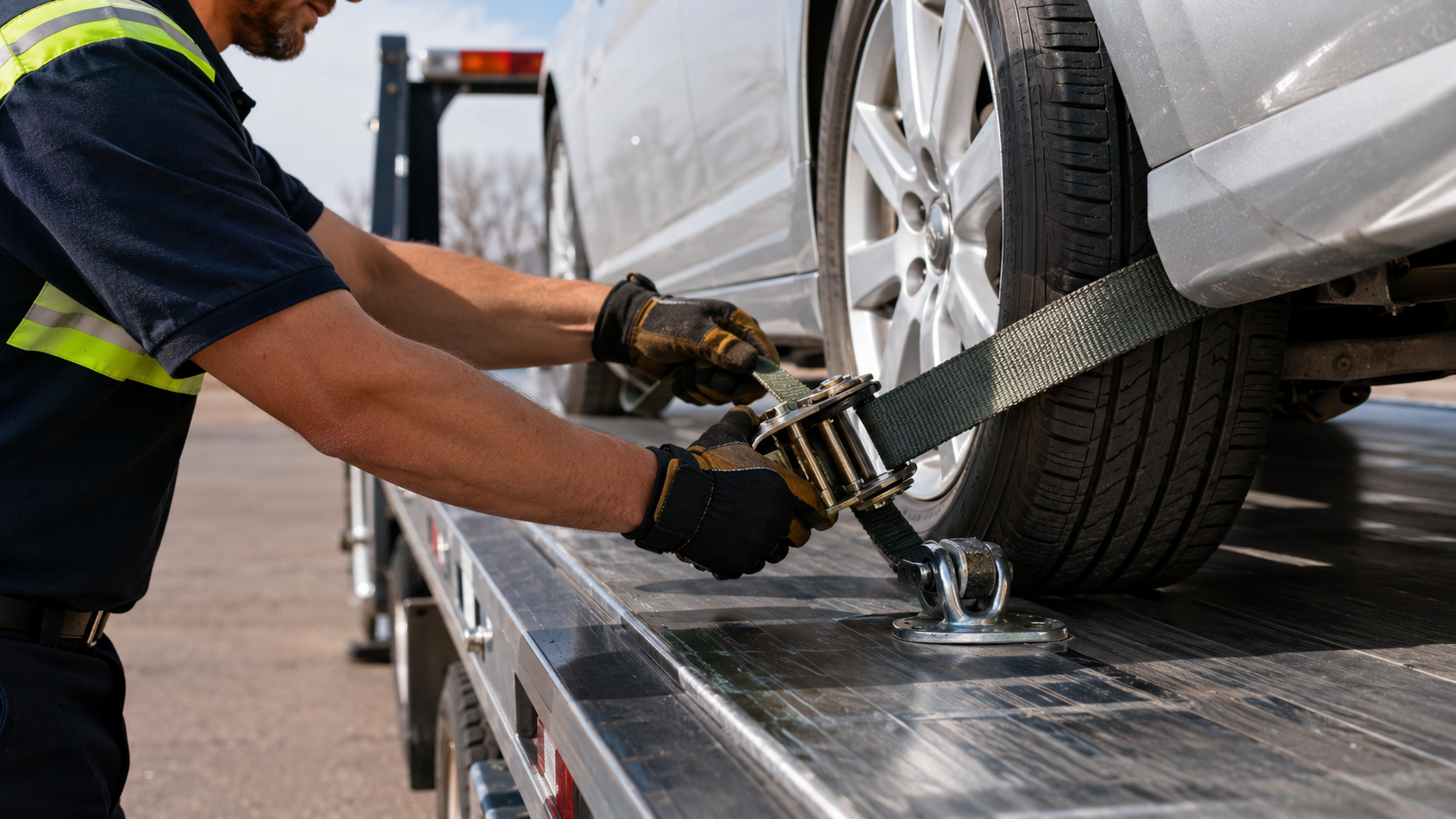
Once the vehicle is centered, the operator secures it using professional straps, chains, or other approved equipment. The exact securement method depends on the vehicle and towing setup. The operator checks the connections before raising the platform and beginning transportation.
Avoid attempting to attach the cable, guide the vehicle, or stand close to the loading area unless the operator specifically directs you. Towing equipment operates under significant tension, so it is important to give the professional enough space to work safely.
Flatbed Towing Versus Wheel-Lift Towing
Wheel-lift towing raises one end of a vehicle while the other wheels remain on the road. It can be a practical option for certain vehicles and short-distance situations, especially when space is limited.
Flatbed towing carries the entire vehicle above the roadway. It is often better suited to accident-damaged cars, all-wheel-drive vehicles, low-clearance models, and vehicles that should not roll.
The best option depends on more than personal preference. Vehicle condition, drivetrain design, manufacturer recommendations, access to the vehicle, and travel distance all influence the decision. A professional towing company can evaluate these factors and recommend a suitable method.
How to Choose a Flatbed Towing Company
When your vehicle needs help, look for a towing company that communicates clearly and asks relevant questions. The dispatcher should gather information about your location, vehicle, and situation before sending assistance.
Professional handling also matters. The operator should inspect the vehicle, choose appropriate attachment points, secure it carefully, and explain where it will be taken. If the vehicle has unusual damage or modifications, communicate those concerns before loading begins.
Local knowledge can also make a difference. A towing company familiar with Gary and the surrounding area can better navigate local roads, traffic conditions, repair facilities, and common pickup locations.
Get Reliable Flatbed Towing in Gary, Indiana
Whether your car has broken down, sustained accident damage, or needs careful transportation, flatbed towing can provide a secure way to move it. The right equipment and loading process help protect the vehicle while getting it to the appropriate destination.
Nakia’s Towing serves drivers throughout the Gary, Indiana area with flatbed towing, roadside assistance, accident recovery, and related towing services. If you are unsure which type of tow your vehicle needs, contact Nakia’s Towing and explain the situation. The team can help determine an appropriate solution and get assistance headed your way.